 ablut
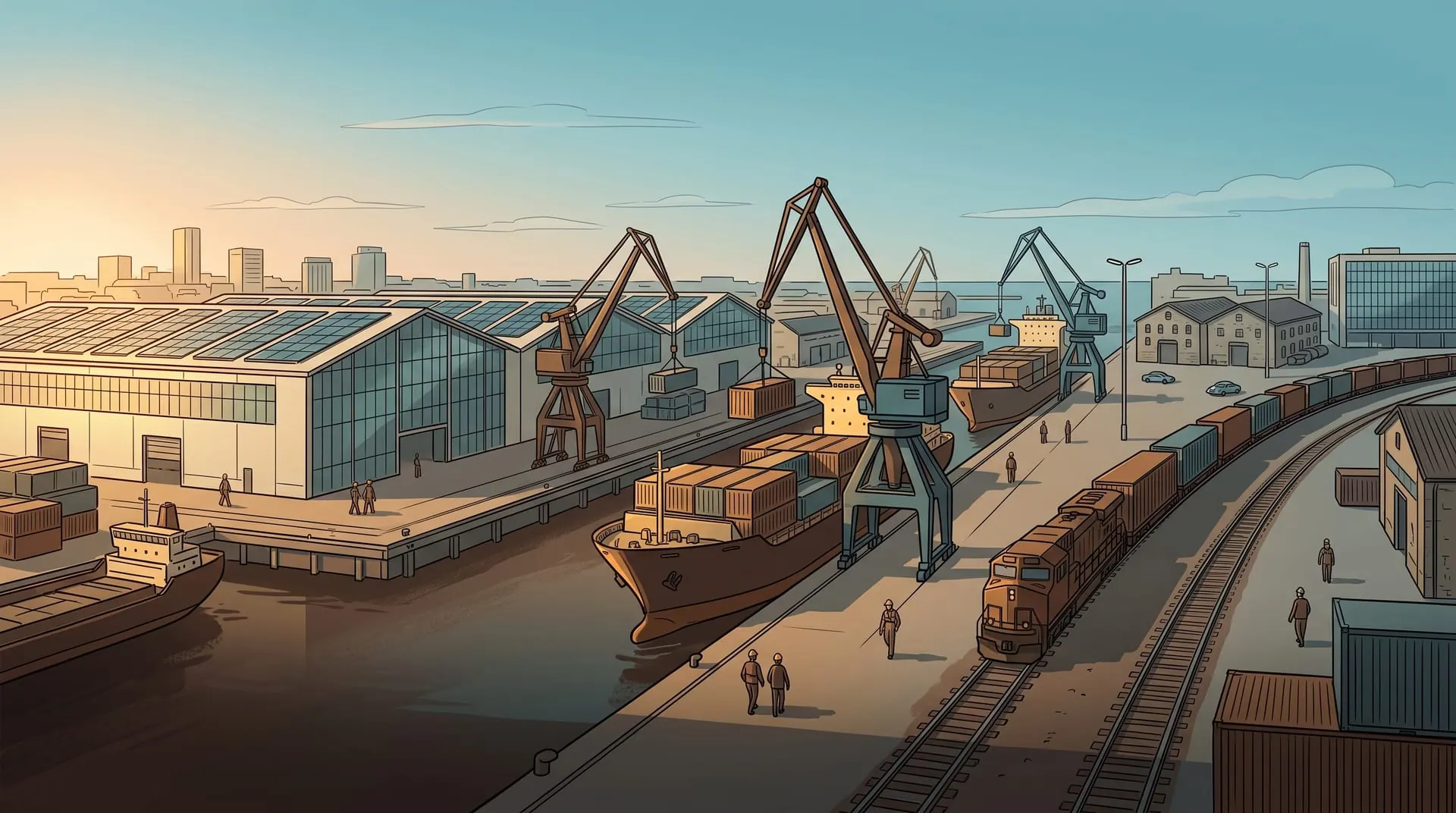
Everything is built. Now what?
The roads are paved, the schools are full and income has stopped climbing. What the upper tiers of Faith ask of you, and where the next rise comes from.
· 5 min read
Eight years in, Alcavera looks finished. Inflation is under 1%, unemployment is under 5%, and Alcavera has the highest income per person of the eight countries. The obvious work is done, and it is not obvious what is left. This is where Faith's long game begins.
The problem: income stops climbing
The roads, schools and ports are in place, yet income per person barely moves. The GUIDE has a name for this: "Income is standing still".
Why: income comes from development, not growth
The game says it plainly: income comes from development, not growth. It rises as infrastructure, human capital and knowledge build up. A country that grows fast but does not develop sees its income mark time. Three things slow the climb at the top.
Maintenance grows with the country. Part of every year's investment only keeps what exists standing. As the stock grows, so does maintenance: in the game's words, "a rich country has to invest just to stand still". Below that level, the country does not stand still, it falls back.
Each tier is further away. Tiers come with income per person, and each threshold is about 1.4 times the one before. The threshold has to stay crossed for some months before you move up. In return, higher tiers open new tools: sector tools and processing, the competition authority and advanced industry. A tool that opens stays open, even if income later falls.
The middle-income trap. When wages rise and exports do not move into technology, low-tech exports lose their edge. Exports fall and development is pulled down. The way out is a larger technology share of the economy, and the game marks the exit with a milestone: "Technology has reached 10% of the economy: out of the middle-income trap."
The upper tiers also bring problems of their own. More pensioners lean on fewer workers (the dependency ratio). From High income, industry drifts to services on its own, and as low-productivity services grow, the economy gets less out of its structure.
What to do
1. Read STATUS › PROGRESS
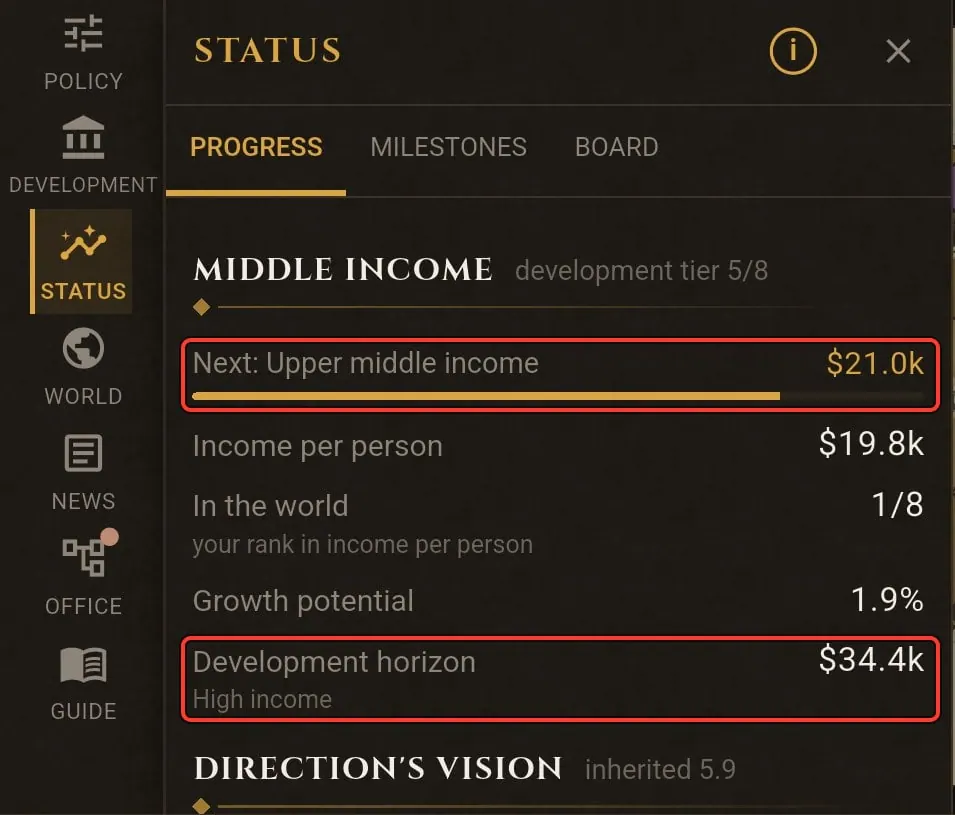
This tab is the map of the long game. It shows your tier, the income needed for the next one, your rank in the world, your growth potential and your development horizon: the income that today's investment size and direction will reach. Stocks take 15 to 25 years to get there, so today's decision writes a generation ahead.
2. Keep investment ahead of maintenance
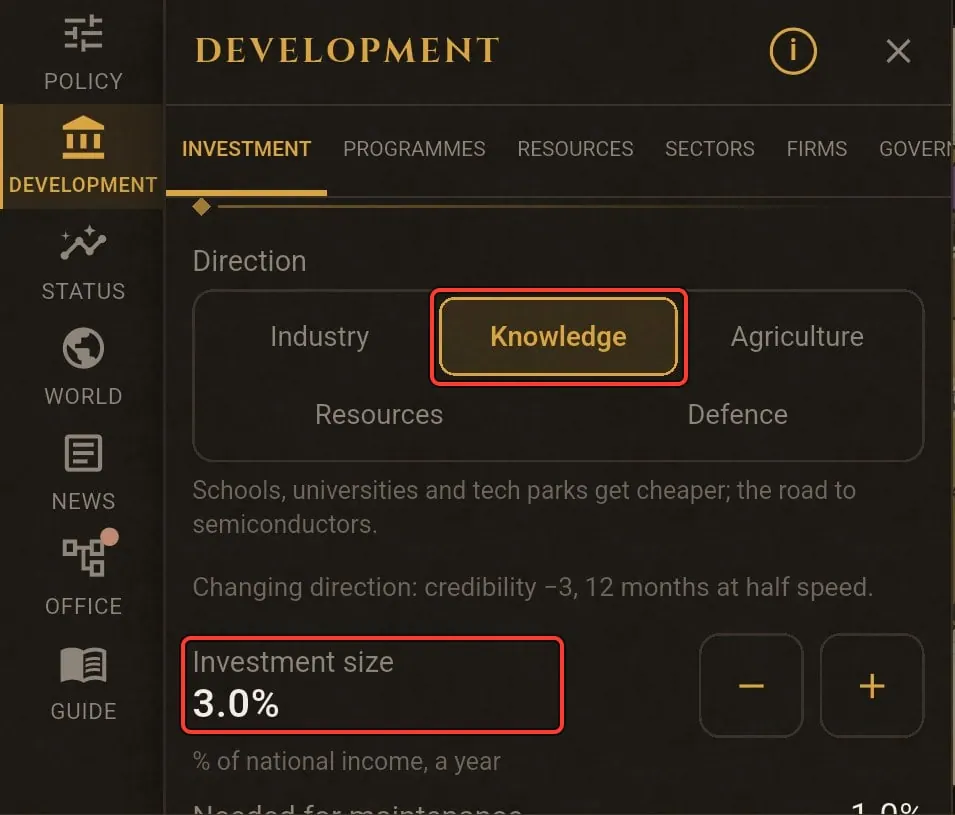
Under DEVELOPMENT › INVESTMENT, compare Investment size with Needed for maintenance. Only what is above maintenance moves the country forward, and the line keeps rising as you build. Investment is paid from the budget, so plan for it alongside your debt.
3. Point the direction at technology
The direction decides which capability builds up and which programmes get cheaper. Knowledge makes schools, universities and tech parks cheaper and leads to semiconductors. That is the road out of the trap. Changing direction is not free: credibility −3 and 12 months at half speed. Pick one and stay with it.
Each direction also has a vision, a measurable goal above where you started. Reaching it counts towards your legacy.
4. Use the tools that the tiers open
DEVELOPMENT › SECTORS gives you incentives, tariffs, credit and tax per sector once you reach the tier that opens them. Tariffs protect a sector, but partners retaliate and the protected sector grows lazy. Incentives cost the budget every year. Use them to push a sector you want to grow, not to keep a declining one alive.
5. Get ahead of the upper-tier problems
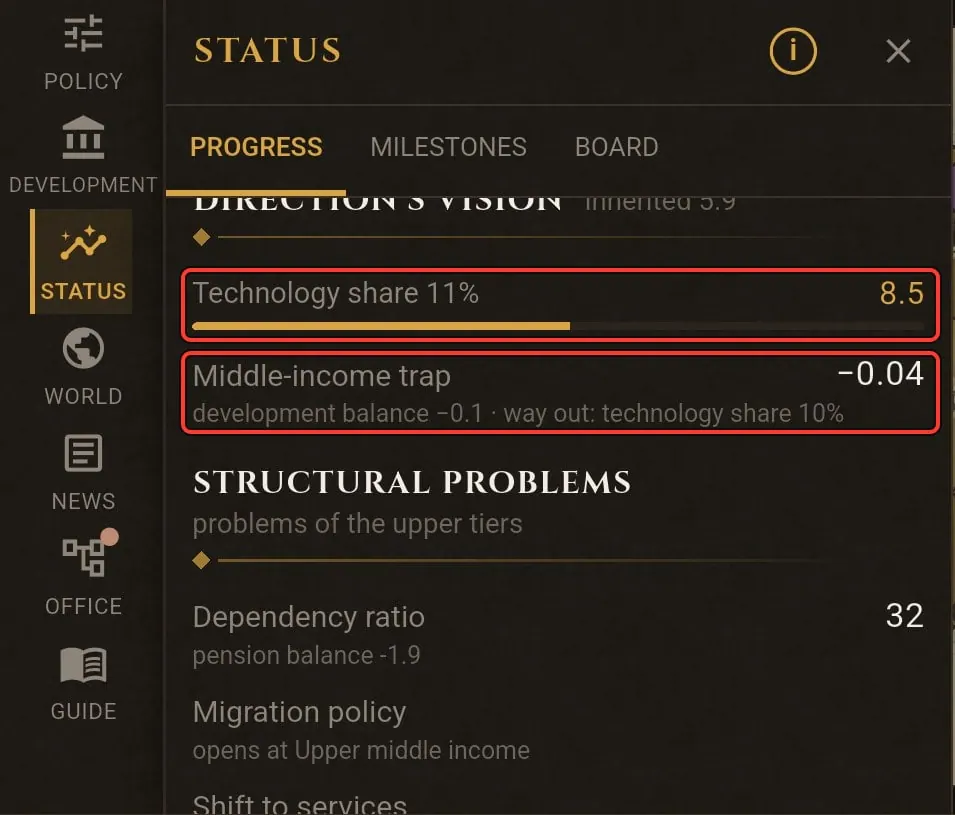
The bottom of STATUS › PROGRESS lists Structural problems, with the tier where each one starts. Raising the retirement age reduces the pension burden over the years, but only by the share of registered workers. The migration policy opens at Upper middle income: young migrant workers lower the dependency ratio, at the cost of tension on the street.
6. Aim for the long goals
Your term is sixty years. STATUS › MILESTONES lists the marks along the way, and each one adds to your legacy. So does every new development peak and every tier you climb. A finished country is never really finished: the score keeps counting what you hold.
A short example: Alcavera in year 8
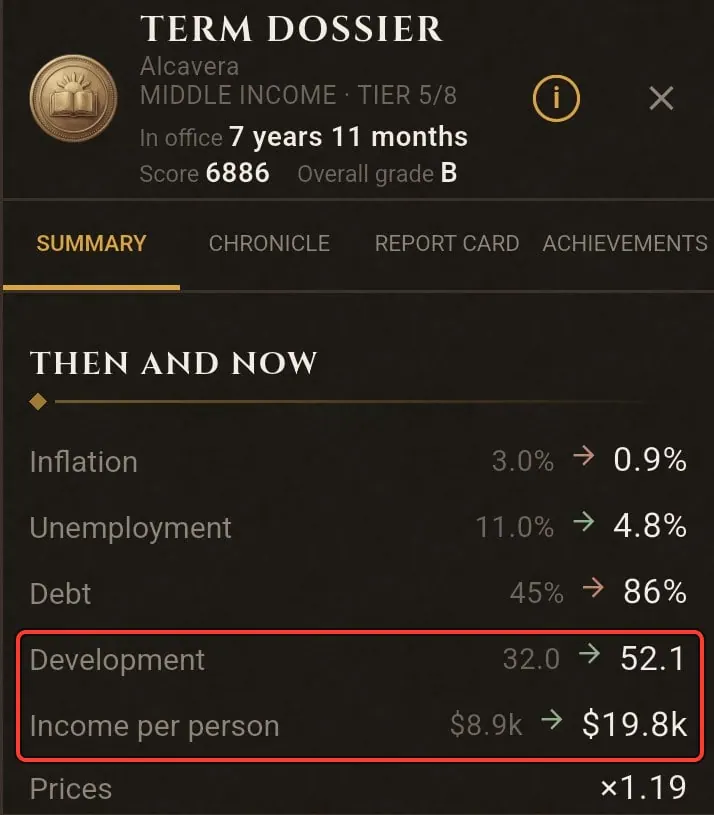
Alcavera has gone from $8.9k to $19.8k per person, and development from 32.0 to 52.1. It is Middle income, tier 5 of 8, and the next tier, Upper middle income, starts at $21.0k.
Investment is 3.0% of national income against 1.0% needed for maintenance, so the country is still building. The development horizon is $34.4k, High income, so the current path leads somewhere good.
The warning is in the middle of the tab. The vision of the Knowledge direction is a technology share of 11%, and today it is 8.5%. A middle-income trap has started to bite (−0.04), and the way out is a technology share of 10%. The direction is already right, so the job is to keep investing and wait for technology to cross that line.
One more thing to watch: debt has climbed from 45% to 86% over the same years. Building a country on borrowed money works only while the debt stays carryable; the guide on debt explains how to bring it back down.
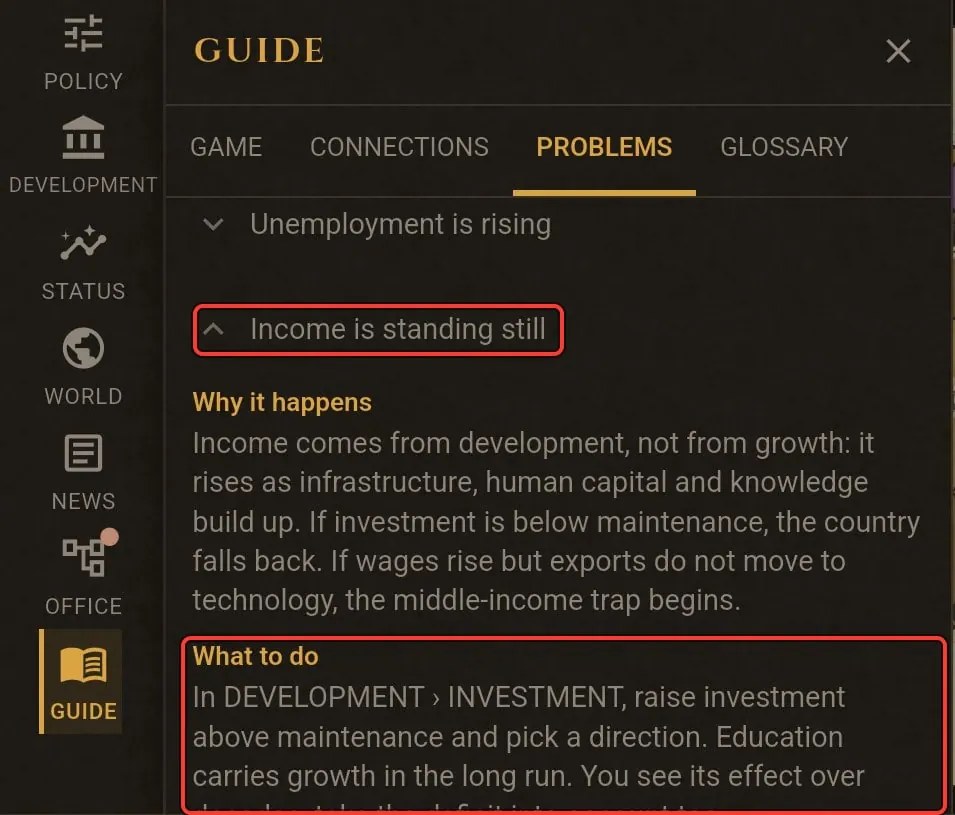
The short version is in the game, under GUIDE › PROBLEMS › "Income is standing still".
More guides

Faith: Economy Simulation · 5 min read
Your first years in Faith
Where to look, what to decide and what to leave alone in your first two years, with Alcavera as the example.

Faith: Economy Simulation · 5 min read
Why debt keeps rising, and how to bring it down
The debt ratio has its own momentum. What drives it in Faith, how to read the DEBT tab, and which levers actually work.

Faith: Economy Simulation · 4 min read
Surviving the Palace
The most common way a run in Faith ends is the Palace removing you. Where its pressure comes from, how the ultimatum works, and how to keep it down.
Faith: Economy Simulation · 4 min read
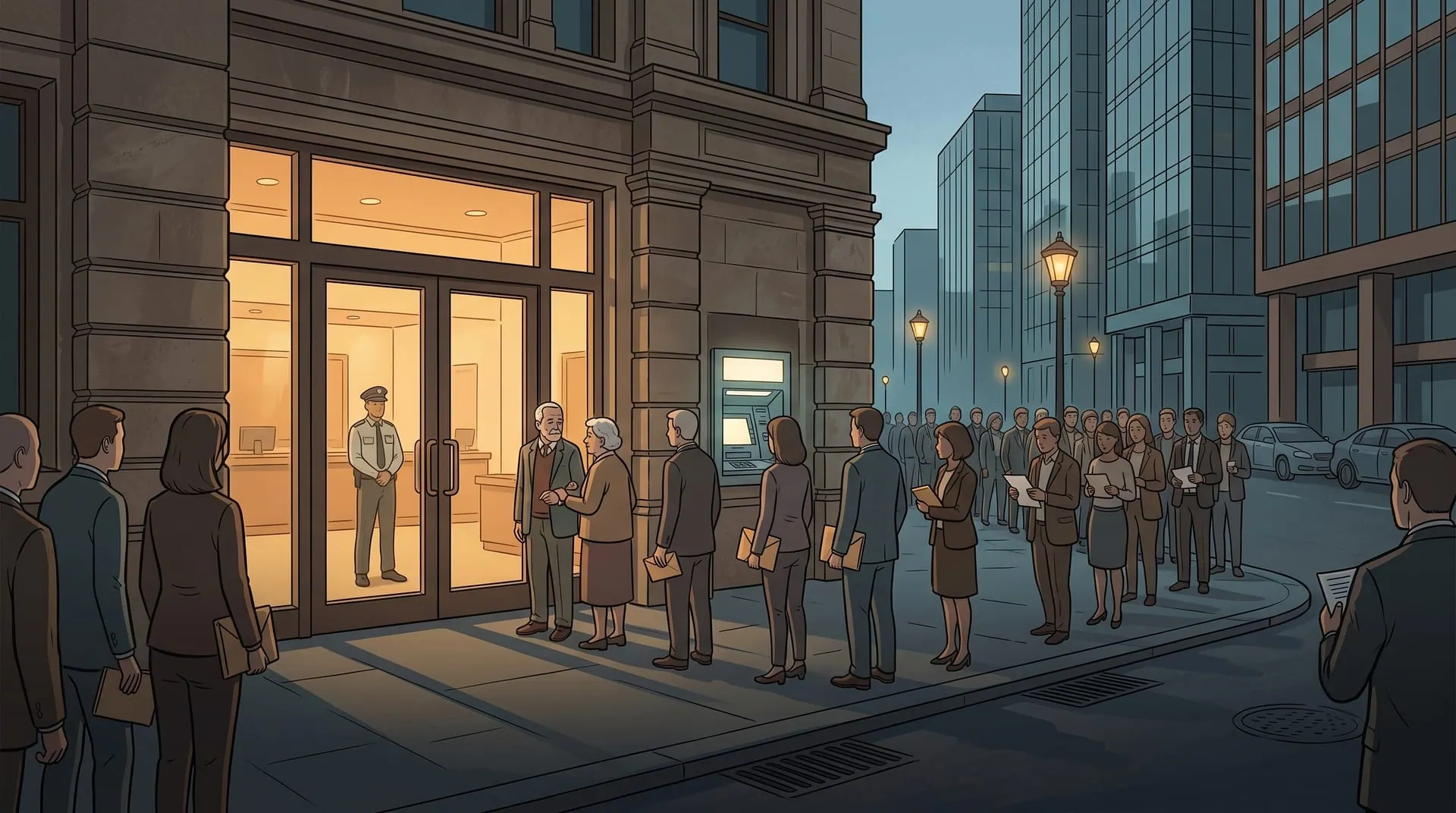
Why the exchange rate jumps, and how to stop a currency crisis
The second most common way a run ends is a currency crisis. What moves the exchange rate in Faith, why reserves matter so much, and which tools buy time and which fix the cause.